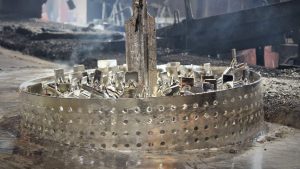

In modern civil engineering projects, selecting the right method to protect metal structures is crucial. Bridges and buildings, as essential urban infrastructures, are constantly exposed to corrosive environmental factors such as humidity, rainfall, air pollution, chemical agents, and extreme temperature fluctuations. One of the most effective and cost-efficient methods to extend the life of these structures is hot-dip galvanizing.Hot-Dip Galvanizing in Bridge Construction and Buildings
Hot-dip galvanizing, a type of metal coating using zinc, plays a key role in preventing steel corrosion and rust. This article provides a comprehensive overview of the application of hot-dip galvanizing in bridge construction and buildings, highlighting galvanizing services, benefits, challenges, and an insight into hot-dip galvanizing costs.
What is Hot-Dip Galvanizing?
Hot-dip galvanizing involves immersing steel components in molten zinc at approximately 450°C after proper surface preparation. This process forms a uniform, durable zinc-iron alloy layer on the steel surface.
Compared to other coatings like paint or electro-galvanizing, hot-dip galvanizing provides higher corrosion resistance, making it widely used in critical civil engineering projects such as bridges and buildings.
Importance of Protecting Metal Structures in Bridges
Bridges constantly endure mechanical stresses, dynamic loads, continuous moisture, and sometimes corrosive environments, such as coastal or industrial areas. Inadequate protection can reduce safety, increase maintenance costs, and cause serious accidents.
Benefits of hot-dip galvanizing in bridges include:
Significant resistance to rust and corrosion
- Reduced long-term maintenance costs
- Increased service life of structures by several decades
- Reliable performance in harsh environmental conditions
Many bridge components, including beams, supports, railings, fasteners, and bolts, are coated with professional galvanizing services.
Application of Hot-Dip Galvanizing in Buildings
Steel plays a critical role in building frameworks, from industrial structures to residential and commercial buildings. Protecting these components from corrosion is essential.
Common building components galvanized include:
- Steel frameworks and structural beams
- Columns and support structures
- Pre-fabricated sheds and large-span structures
- Railings, staircases, and fences
- Metal façades and exterior elements
Hot-dip galvanizing in these areas ensures long-term durability against moisture, rainfall, and environmental pollutants.
Role of Galvanizing in Durability
Hot-dip galvanizing is more than just a surface coating. The zinc layer acts as a sacrificial anode, meaning even if minor scratches occur, zinc corrodes instead of steel, providing active corrosion protection.
This feature ensures galvanized structures remain durable under extreme conditions.
Galvanizing Services in Civil Engineering Projects
Many industrial companies offer specialized hot-dip galvanizing services for bridge and building projects. These services include:
- Technical consultation during design
- Surface cleaning and degreasing
- Hot-dip galvanizing process
- Quality control and coating thickness measurement
- Delivery according to international standards
Choosing a reputable company for galvanizing services significantly impacts the final quality of the structure.
Standards Used in Hot-Dip Galvanizing in Bridge Construction and Buildings
To ensure quality coating, several international standards are applied:
- ASTM A123
- ISO 1461
- EN 10240
Compliance with these standards is critical for civil engineering projects, as structural safety and durability depend on them.
Why Hot-Dip Galvanizing is Cost-Effective
Although initially more expensive than painting, hot-dip galvanizing is cost-effective in the long run due to reduced maintenance, repainting, and operational downtime.
- Hot-Dip Galvanizing Costs
- Factors affecting the cost of hot-dip galvanizing include:
- Component weight and dimensions
- Required coating thickness
- Type of galvanizing services
- Market price of zinc
- Project scale
In large-scale bridge and building projects, evaluating galvanizing costs relative to long-term maintenance savings is essential.
(You can link internally to an article like “How Hot-Dip Galvanizing Costs Are Calculated” for more details.)
Comparison with Other Coating Methods
Compared to industrial paints or epoxy coatings, hot-dip galvanizing offers:
- Longer service life
- Higher impact resistance
- Uniform coverage even in hard-to-reach areas
- Reduced maintenance frequency
- Thus, hot-dip galvanizing is the preferred method in critical infrastructure projects such as bridges.
- Challenges and Limitations
- Despite numerous advantages, hot-dip galvanizing has some limitations:
- Size limitations of components
- Need for proper component design
- Cost dependency on global zinc market
These challenges are minimal compared to the extensive benefits of this method.
Future of Hot-Dip Galvanizing in Civil Engineering
With increasing infrastructure projects and greater focus on durability and sustainability, the use of hot-dip galvanizing in bridges and buildings is growing. Engineers and project owners increasingly choose this method as a reliable long-term solution.
Conclusion
Hot-dip galvanizing is one of the most effective protective methods for metal structures, significantly extending the lifespan of bridges and buildings. Utilizing professional galvanizing services improves structural performance and proves to be economically beneficial in the long term.